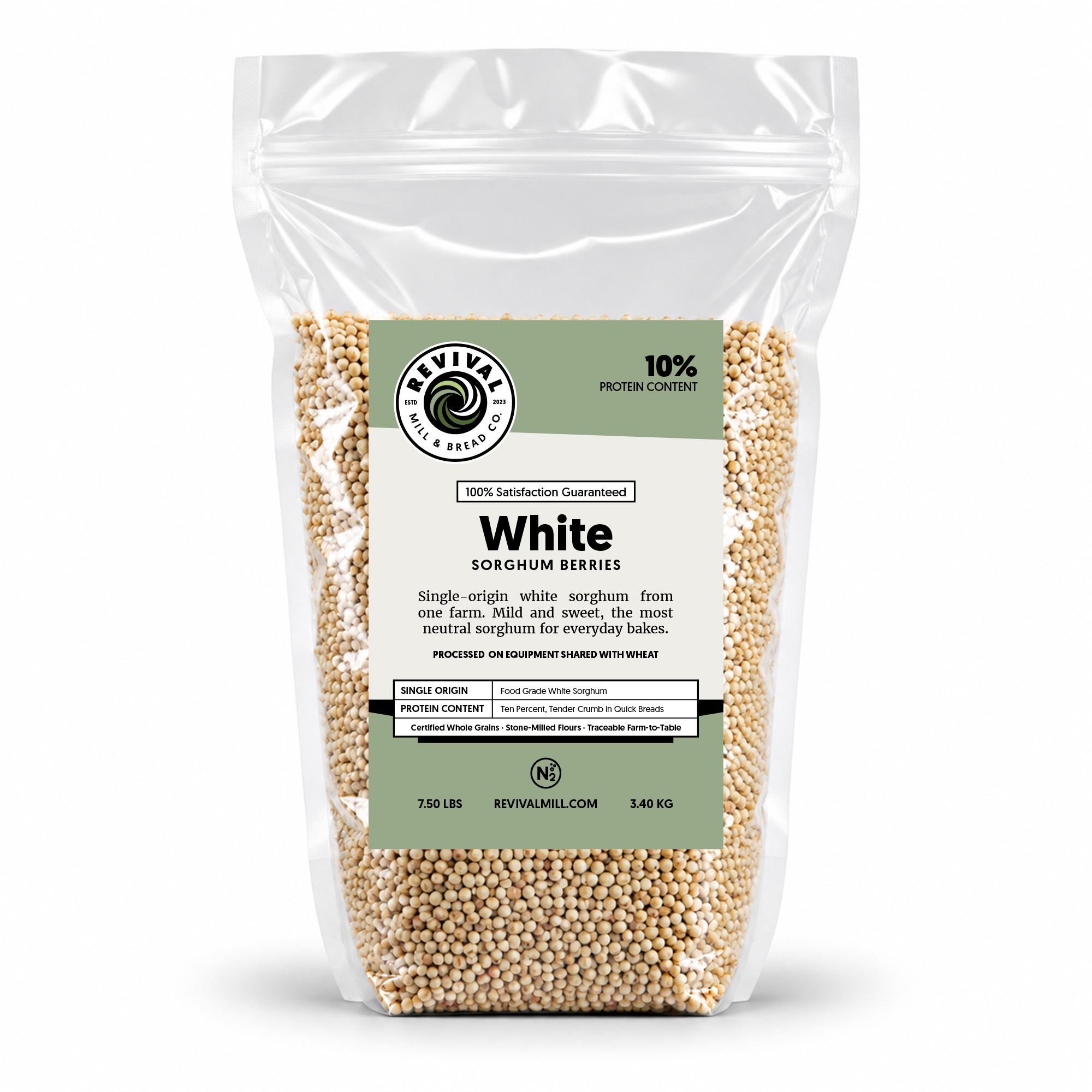
Single-origin white sorghum for home millers, grown on one farm in Vega, Texas and packed whole.
Description
White sorghum is the mildest of our sorghums, and these berries are the same grain we mill for our White Sorghum Flour. Mill it fine for a lightly sweet, neutral flour that suits muffins, pancakes, and cookies and gives quick breads a tender crumb. In recipes leavened with baking powder or baking soda, the flour bakes much like an all-purpose wheat flour. For yeasted loaves, add xanthan gum to give the dough the structure sorghum lacks on its own. The whole grain can also be cooked on its own like rice or farro. Sorghum is small and hard, so check that your mill is rated for it before grinding.
Whole Berries for Your Home Mill
This is a provenance grain, not a blend. You know what it is, you know where it grew, and you decide when it becomes flour. We vacuum-seal our identity-preserved berries with a nitrogen flush in a heavy-duty bag, which pushes out the oxygen insects need and keeps the grain in good shape for storage. Keep a supply on hand and mill what you need.
- Single Origin: White sorghum from one farm in Vega, Texas.
- 10% Protein: A tender crumb in quick breads and body in wheat blends.
- Built for Home Milling: Clean, whole berries ready for your home mill.


