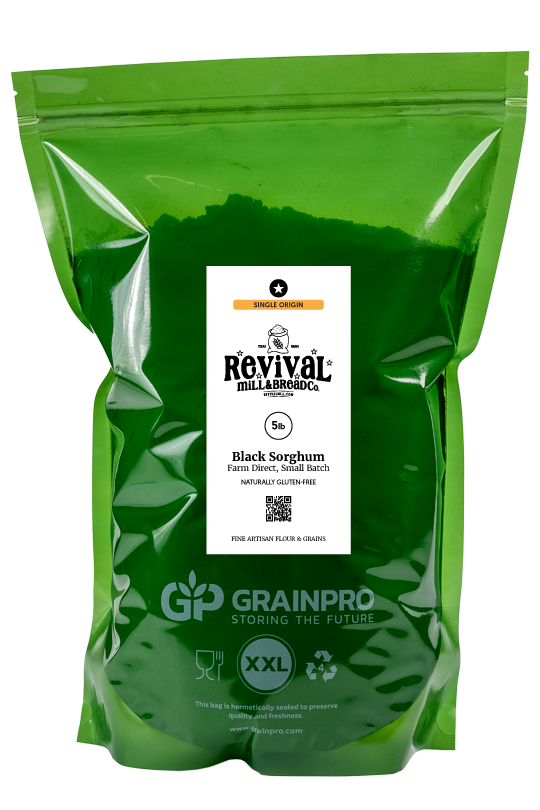
Black Sorghum Overview
Definition & Characteristics
Black sorghum (Sorghum bicolor) features small, round kernels enveloped in a deep purple-black pericarp rich in anthocyanin pigments. The endosperm is typically corneous (hard), giving the grain a glassy appearance. Kernel size averages 3–4 mm in diameter, similar to other sorghum varieties, but the dark hull makes it stand out both visually and nutritionally.
Milling Considerations
-
Stone Milling: Preferred for black sorghum to minimize heat buildup, preserve its vivid color, and retain antioxidant compounds. Adjustable milling gaps help achieve 70–80% extraction for a balanced blend of bran, germ, and endosperm.
Baking Applications
-
Gluten-Free Blends: Its natural pigments deliver dramatic color and added nutrition when blended with starches (tapioca, rice) and binders (xanthan gum).
-
Partial Wheat Substitution: Up to 15–20 % replacement in wheat breads and muffins for a striking crumb color without compromising rise.
-
Quick Breads & Cookies: The mildly nutty and roasted notes complement spices, chocolate, and nuts, adding both flavor depth and visual appeal.
Flavor Profile
Black sorghum flour offers a toasty, earth-tinged sweetness with subtle coffee or cocoa undertones. Its flavor is more pronounced than white sorghum, making it a natural partner for bold add-ins like dark chocolate, molasses, or warm spices.
Nutritional Profile (per 100 g dry flour)
-
Calories: ~360 kcal
-
Protein: 8–11 g
-
Carbohydrates: 75–78 g (including 5–7 g dietary fiber)
-
Fat: 2–3 g
-
Micronutrients:
-
Iron: ~2.5 mg
-
Magnesium: ~60 mg
-
Phosphorus: ~280 mg
-
B-Vitamins: niacin (B₃), thiamine (B₁)
-
-
Phytonutrients: High in anthocyanins and polyphenolic antioxidants, supporting anti-inflammatory and heart-health benefits.


